


How to Prevent Colds in Kids: A Pediatrician's Cold-Season Prep Guide


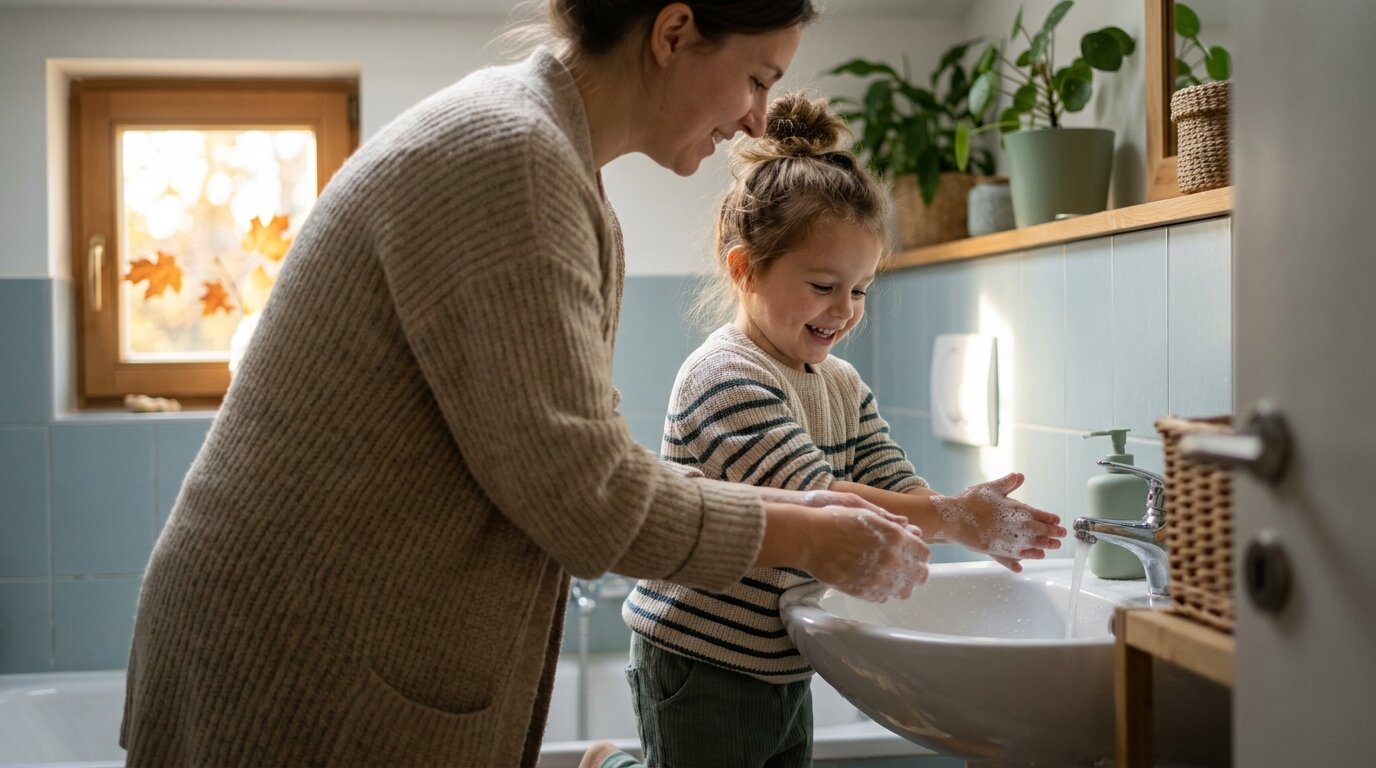
The best way to prevent colds in kids is frequent, thorough handwashing, plus enough sleep and a balanced diet. No vitamin or mineral reliably prevents colds. But good hygiene habits can meaningfully cut how often your child gets sick, by about 20%.
Early fall is the on-ramp to cold season. It is also the time to prep for flu season. If your child is getting a flu vaccine for the first time, timing matters. Kids ages 6 months through 8 years who have never had a flu shot, or have had fewer than two in their life, may need two doses about four weeks apart. Start the first dose as soon as the vaccine is available, so both are done before the end of October.
When a cold does hit, get pediatrician guidance 24/7
Start a visitKey Takeaways
- Handwashing is the single most effective step. It lowers respiratory illnesses, like colds, by about 20%.
- Most kids get about 8 to 10 colds in their first two years, roughly 4 to 5 a year, and more in daycare. Frequent colds usually mean normal exposure, not a weak immune system.
- No vitamin or mineral prevents colds. Taken daily, vitamin C may shorten a cold by about a day, but can cause side effects like diarrhea.
- Vitamin D does not prevent colds, but it still matters for your child's bones.
- Enough sleep supports a healthy immune system.
- A flu shot doesn't prevent colds, but it protects against the flu. Aim to get it by the end of October.
- Call your pediatrician right away for any illness in a baby 3 months or younger, or at any age for trouble breathing or blue lips.
How many colds are normal for kids?
Most children get about 8 to 10 colds in their first two years, roughly 4 to 5 a year, and more in childcare. Frequent colds usually mean normal exposure, not a weak immune system.
Daycare parents ask us some version of this every fall: "why does my child keep catching colds?" The answer is usually normal exposure, not a weak immune system. The American Academy of Pediatrics (AAP) says most children have around 8 to 10 colds in their first two years. Kids in daycare, or with older siblings at school, may have even more.
Why so many? More than 200 different viruses can cause a cold. Each cold is a new virus, and getting sick with one doesn't protect against the next. Most colds clear up on their own in about a week to 10 days. (Not sure if it's a cold or something else? See our guide, Is It a Cold or the Flu?.)
One large study followed children for eight years. It found that kids who started full-size group childcare early had more respiratory infections as toddlers, but fewer once they reached elementary school. The researchers said parents can be reassured that early childcare infections do not lead to more illness overall.
Does anything actually prevent colds in children?
Nothing prevents colds completely, but some steps clearly help. Handwashing has the strongest evidence behind it.
Let's be honest: nothing stops every cold. But some habits clearly help, and others are mostly myth. Here is what the research shows, strongest first:
- Handwashing is the best-supported step. It cuts respiratory illnesses by about 20%.
- Enough sleep supports a healthy immune system.
- A balanced diet supports normal immune function.
- Supplements (vitamin C, vitamin D, zinc) do not prevent colds.
The rest of this guide walks through each one: what to do, and what to skip.
Handwashing and hygiene: the #1 way to prevent colds
Handwashing is the single most effective way to lower your child's cold risk. It is good for about 20% fewer respiratory illnesses.
Handwashing is the one prevention step with strong proof behind it. Washing hands often lowers colds and other respiratory illnesses by about 20%. That number comes from the CDC. It won't stop every cold. But no supplement comes close.
How to teach kids to wash their hands (20-second rule)
- Wet hands with clean water, then turn off the tap and apply soap.
- Lather everywhere: backs of hands, between fingers, and under the nails, where germs hide.
- Scrub for about 20 seconds, long enough to sing the ABCs.
- Rinse under clean, running water.
- Dry well, since germs spread more easily from wet hands.
Two myths worth clearing up:
- Hot water isn't needed. Warm or cool water cleans just as well, and hot water can irritate skin.
- Plain soap is fine. "Antibacterial" soaps are no better than regular soap for home use.
When soap and water aren't handy, use a hand sanitizer with at least 60% alcohol.
Keep sanitizer out of reach
Alcohol-based hand sanitizer should be used with adult supervision for young children. Swallowing it can cause serious poisoning, so store it up high and away.
Cough and sneeze etiquette
Teach your child to sneeze or cough away from others, into the crook of their elbow or shoulder. If the virus lands on their hand, it can spread to whatever they touch.
American Academy of Pediatrics
Using a tissue and throwing it away right away works too. The goal is simple: keep germs off the hands that touch toys, siblings, and doorknobs.
Cleaning high-touch surfaces
Cold viruses can be picked up from surfaces, but clean hands matter more than constant disinfecting.
You may have heard that cold germs "live on surfaces for a week." That figure comes from tests that detect a virus's genetic material, which is not the same as live virus that can still make someone sick. In one study of rhinovirus - the most common cold virus - the virus transferred to fingertips in about 1 in 5 tries an hour after a surface was contaminated, and not at all after two days.
So wiping down high-touch spots helps, but clean hands matter more. Focus on the places germs collect: doorknobs, faucet handles, the refrigerator door, light switches, and the TV remote. Common household disinfectants work well.
Bleach safety
If you use a bleach solution, never mix it with other cleaners, and store all cleaning products locked away from children.
Do vitamins prevent colds in kids? (Vitamin C, vitamin D, zinc)
No vitamin or mineral prevents colds in children. But taken daily, vitamin C may shorten a cold by about a day, though it can cause side effects like diarrhea.
This is where the science surprises many parents. No vitamin or mineral has been shown to stop kids from catching colds.
- Vitamin C does not prevent colds. But taken every day, before anyone gets sick, it may make a child's cold about a day shorter, though it can cause side effects like diarrhea. Starting it after symptoms begin doesn't help.
- Vitamin D does not prevent colds. The largest review in children under five, covering 107 studies and more than 31,000 kids, found at most a very small effect on doctor visits for respiratory infections, and no reduction in how many visits children made. Vitamin D still matters for strong bones, and most children should get a daily amount. It just isn't a cold shield.
- Zinc does not prevent colds, and it can cause nausea or a bad taste.
Skip nasal zinc products
Never use zinc products sprayed or swabbed into the nose. These were pulled from the U.S. market after reports of lasting loss of smell. They are not safe for children.
Food first is the sensible approach. For a deeper look, see our guide to immune-supporting foods for kids. Always ask your pediatrician before starting any supplement.
How much sleep do kids need to stay healthy?
Enough sleep supports a healthy immune system. Most preschoolers need 10 to 13 hours a day, including naps.
Sleep helps the immune system work the way it should. Here is how much children need each day, including naps. These totals come from the American Academy of Sleep Medicine and are endorsed by the AAP.
| Age | Sleep per 24 hours (including naps) |
|---|---|
| 4 to 12 months | 12 to 16 hours |
| 1 to 2 years | 11 to 14 hours |
| 3 to 5 years | 10 to 13 hours |
| 6 to 12 years | 9 to 12 hours |
| 13 to 18 years | 8 to 10 hours |
These totals include naps. There is no set number for babies under 4 months, whose sleep varies widely.
In studies of adults, short sleepers caught more colds after being exposed to the virus. People who slept less than six hours a night got sick more often than those who slept more than seven. These studies were done in adults, not children. Still, pediatricians recommend enough sleep for many reasons. Supporting your child's immune system is one of them.
Everyday habits that lower cold risk (diet, activity, hydration)
A balanced diet, a smoke-free home, and staying home when sick all support your child's health during cold season.
A few daily habits round out your prevention plan:
- Serve a balanced diet. Good nutrition supports normal immune function. No single food prevents colds, so aim for variety over any one "superfood."
- Keep a smoke-free home. Secondhand smoke raises a child's risk of respiratory and ear infections.
- Protect young babies. For infants under 3 months, keep them away from people who have colds.
- Stay home when sick. It helps your child rest and keeps germs from spreading to others.
One myth to drop: cold weather doesn't cause colds. Viruses do. Colds rise in fall and winter because kids are indoors and back in school, not because of the temperature. Staying hydrated and active is good for your child overall, though neither has been shown to prevent colds.
Should my child get the flu vaccine before cold season?
Yes. The American Academy of Pediatrics recommends a yearly flu vaccine for every child 6 months and older, ideally by the end of October.
A flu shot won't prevent colds, because colds and the flu are caused by different viruses. But it is the best protection against the flu, which can be serious in young children.
Timing matters, especially for younger kids. Aim to have your child vaccinated by the end of October. Children ages 6 months through 8 years getting the flu vaccine for the first time may need two doses about four weeks apart, so start early, as soon as the vaccine is available.
If you have questions or concerns about the flu vaccine, that is normal. Bring them to your pediatrician, who can walk you through what is right for your child, including dosing and timing.
When should I call the doctor about my child's cold?
Call your pediatrician right away for any illness in a baby 3 months or younger, or for trouble breathing, blue lips, or a fever over 102°F.
Most colds clear up at home. But some signs need a call. One age rule comes first:
Babies 3 months or younger
If your baby is 3 months old or younger, call your pediatrician at the first sign of any illness. In young babies, a cold can quickly turn into a more serious problem.
For a child older than 3 months, call your pediatrician if:
- They have any trouble breathing: fast breathing, the nostrils widening with each breath, or the skin around the ribs pulling in with each breath
- Their lips or nails turn blue
- Their fever goes over 102°F (38.9°C)
- Nasal mucus lasts longer than 10 to 14 days
- A daytime cough lasts more than 10 days
- They have ear pain, or are unusually fussy, sleepy, or cranky
Also call if your child isn't getting a little better each day, or isn't fully better within a week. If a sore throat is part of the picture, our pediatrician's guide to sore throat can help you know what to watch for.
For everyday cold questions, is this normal, what can I give
Message your pediatricianHow Blueberry Pediatrics helps during cold season
Cold season is exactly when it is hardest to get a doctor's appointment. Blueberry Pediatrics gives you 24/7 access to a pediatric team from home. When your child spikes a fever at midnight, or you are not sure a cough needs a visit, you can message or start a visit right away. No waiting room, and no exposure to other sick kids.
Prep before the season, and know exactly what to do when your child does catch a cold.
Get 24/7 pediatric care from home
Start a visitMedical Disclaimer: This article is for general educational purposes and is not a substitute for professional medical advice, diagnosis, or treatment. Always seek the advice of your pediatrician or another qualified health provider with any questions about your child's health.
Sources
- American Academy of Pediatrics / HealthyChildren.org. Children & Colds (Upper Respiratory Infections). Updated Jan. 27, 2025.
- American Academy of Pediatrics / HealthyChildren.org. Healthy Sleep Habits: How Many Hours Does Your Child Need?
- American Academy of Pediatrics. Recommendations for Prevention and Control of Influenza in Children, 2026–2027. Pediatrics. Sept. 2026. doi:10.1542/peds.2026-078778.
- Centers for Disease Control and Prevention. About Common Cold. Feb. 19, 2026.
- Centers for Disease Control and Prevention. Handwashing Facts. April 17, 2024.
- Centers for Disease Control and Prevention. Flu and Children. June 16, 2026.
- Centers for Disease Control and Prevention. Preventing Seasonal Flu. Sept. 26, 2025.
- Jefferson T, Dooley L, Ferroni E, et al. Physical interventions to interrupt or reduce the spread of respiratory viruses. Cochrane Database Syst Rev. 2023;1(1):CD006207. PMID 36715243.
- Hemilä H, Chalker E. Vitamin C for preventing and treating the common cold. Cochrane Database Syst Rev. 2013;(1):CD000980. PMID 23440782.
- van Arragon M, Grant CC, Scragg RK, Jordan VM. Vitamin D for preventing acute respiratory infections in children up to five years of age. Cochrane Database Syst Rev. 2026;4(4):CD015111. PMID 42037591.
- Nault D, Machingo TA, Shipper AG, et al. Zinc for prevention and treatment of the common cold. Cochrane Database Syst Rev. 2024;5(5):CD014914. PMID 38719213.
- Paruthi S, Brooks LJ, D'Ambrosio C, et al. Recommended amount of sleep for pediatric populations: a consensus statement of the American Academy of Sleep Medicine. J Clin Sleep Med. 2016;12(6):785-786. PMID 27250809.
- Côté SM, Petitclerc A, Raynault MF, et al. Short- and long-term risk of infections as a function of group child care attendance: an 8-year population-based study. Arch Pediatr Adolesc Med. 2010;164(12):1132-7. PMID 21135342.
- Winther B, McCue K, Ashe K, Rubino J, Hendley JO. Rhinovirus contamination of surfaces in homes of adults with natural colds. J Med Virol. 2011;83(5):906-9. PMID 21412799.
- Prather AA, Janicki-Deverts D, Hall MH, Cohen S. Behaviorally assessed sleep and susceptibility to the common cold. Sleep. 2015;38(9):1353-9. PMID 26118561.
- Cohen S, Doyle WJ, Alper CM, Janicki-Deverts D, Turner RB. Sleep habits and susceptibility to the common cold. Arch Intern Med. 2009;169(1):62-7. PMID 19139325.
- Sattar SA, Jacobsen H, Springthorpe VS, Cusack TM, Rubino JR. Chemical disinfection to interrupt transfer of rhinovirus type 14 from environmental surfaces to hands. Appl Environ Microbiol. 1993;59(5):1579-85. PMID 8390817.
.svg)




.svg)
.svg)

